
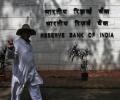
The Reserve Bank's rate-setting panel began its three-day deliberations on Monday to decide the next monetary policy amid expectations that the central bank will maintain status quo on the benchmark interest rate in the backdrop of global scare due to the new coronavirus variant Omicron. Reserve Bank Governor Shaktikanta Das headed six-member Monetary Policy Committee (MPC) is scheduled to announce the policy resolution on Wednesday. If the RBI maintains status quo in policy rates on Wednesday, it would be the ninth consecutive time since the rate remains unchanged.
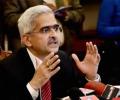
Reserve Bank Governor Shaktikanta Das has pitched for policy support from all sides -- fiscal, monetary and sectoral -- to nurture recovery of the economy hit by the second wave of the coronavirus pandemic. The dent on economic activity due to the second wave of the pandemic during April-May necessitated continuation of monetary measures to support the process of economic recovery to make it durable, Das had said while participating in the meeting of the Monetary Policy Committee (MPC) earlier in the month. "Overall, the second wave of COVID-19 has altered the near-term outlook, and policy support from all sides - fiscal, monetary and sectoral - is required to nurture recovery and expedite return to normalcy," Das said, as per the minutes of the meeting released on Friday.

'Just see what kind of political, social and economic impact it will have when the number of unemployed goes up four times in one year suddenly.'

The Reserve Bank's rate-setting panel, Monetary Policy Committee (MPC), began its three-day deliberations on Wednesday amid expectations of a status quo on benchmark rate mainly on account of uncertainty over the impact of the second wave of COVID-19 pandemic. Moreover, the fears of firming inflation may also refrain the MPC from tinkering with the interest rate in its bi-monthly monetary policy outcome to be announced on Friday. The RBI had kept key interest rates unchanged at the last MPC meeting held in April.

The previous high GDP growth of 8.1 per cent was recorded in April-June quarter of 2016-17.

Is the worst over for Indian banks? The past two years saw them ride on treasury trades as deposits soared and credit growth dipped sharply. Gross and net non-performing assets (NPAs) moved south, and the provision coverage ratio (PCR), capital buffers, and profitability indicators are back at pre-pandemic levels. So, what's the plot ahead?

News of all that's transpired on and off the football field

Banks such as IndusInd Bank, Federal Bank, DCB Bank and Axis Bank which have renewed their focus on secured loans may be, hence, walking on a tightrope.

Crisis of growth is worsened by the challenging global environment and policy missteps. Returning to 9 per cent growth trajectory will be a tall order.

However, the government's draft policy on e-commerce companies has forced consumer companies to also adapt to the changes. For Dabur India, e-commerce channel continues to be a key driver of growth in urban India. The contribution of online sales to its entire portfolio is at six per cent compared to 1.5 per cent before the pandemic.

In May, Satpal Singh, who runs a dairy business with three buffaloes in Jewar, near Noida, was worried about the steep spike in input costs. Singh said dry fodder rates, which cost Rs 1,500-2000 per tractor trolley last year, were quoting at Rs 4,500-5,000. The price of other cattle feed ingredients (that include mustard meal and similar mixes) had also gone up from Rs 2,000 per quintal to Rs 3,100-3,200 per quintal.

For 2021-22, it projected the economy to clock a growth of 10.6 per cent.

Indian indices fell more than those of most other emerging markets.

If reforms were to end, after some lag, so would the India story.

Technically, the Indian economy is on road to recovery.

An easier economic climate in India over the past six years thanks to easing of capital controls and other restrictions has seen significant shifts in money flows in and out of the country.
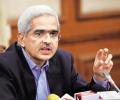
Softening inflation, Das said would make available more policy space to the central bank to address risks to the growth going forward.

Sensex firm on favourable GDP numbers for FY16.
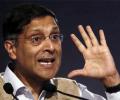
"It's a welcome development, but we also feel it was long overdue... It's a recognition of the actions that the government has undertaken like GST, bankruptcy. We also need to keep all these things in perspective," Chief Economic Adviser Arvind Subramanian said.

'The CEA suggested that could be as high as 19 per cent.'

'This market is very expensive in some pockets, dirt cheap in some, and the belly of the market is reasonably valued.'
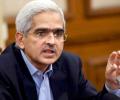
The rising COVID-19 infections across the country are a matter of concern, but it may not impact the ongoing economic revival as one does not foresee lockdowns, Reserve Bank Governor Shaktikanta Das said on Thursday. The economic revival will continue "unabated", Das said, asserting that there is no need for a downward revision of RBI's 10.5 per cent GDP growth forecast for FY22. Speaking at Times Network's India Economic Conclave, Das said, "We have 'insurance' to protect economic revival like a fast-paced vaccination drive, greater ability among people to follow COVID protocols", and one does not see lockdowns as well.
The supply-side driven inflationary pressures, from food or fuel prices, would be mitigated by a neutral stance and a prolonged pause on rates, says Gaurav Kapur.

The government has unleashed a slew of reforms to attract greater investments including higher foreign direct investment in defence and opening up the railways infrastructure sector, relaxed labour laws, launched campaigns like the Make in India for re-invigorating manufacturing, Clean India and Digital India, among others.

The Y V Reddy-headed commission said the states should use extra fiscal space for productive assets

The company received a fresh equity infusion in 2012-13.

It is imperative to check the basics of a company before investing in it

If the challenge of the government is to regain the confidence of the minorities, it has to first overpower its own unruly gangs and their heroic masters, says Sunil Varghese.

Launches of new homes reduced drastically this year.
The minutes of the December MPC meet reveal members felt the current spike in the headline inflation rate was due to a temporary supply shock on the food front, expected to moderate by the second quarter of 2020-21.

The repo or short term lending rate remains unchanged at 6.75 per cent and the reverse repo rate at 7.75 per cent.

'We believe there will be a full shutdown for four weeks and a partial shutdown for eight weeks.' 'Hence, economic activity is unlikely to normalise before the end of May.'

The Governor said the MPC had voted to maintain its accommodative stance, implying more rate cuts in the future if the need arises.

'The economy needs to deliver the expected 7.5% growth for the markets to deliver better than single digit returns.' 'Any disappointment in growth can see the markets correcting downwards.'

Retail, logistic, educational services and fast moving consumer goods and durables alone will add around 1.66 lakh, 1.49 lakh, 1.17 lakh and 1.10 lakh jobs respectively.

The route to that target is clear in Sikka's mind.

Information technology, not manufacturing or infrastructure, should be the focus of the government while implementing initiatives such as Make in India and Start Up India.

India Inc is encouraged by a determined Budget.

'One way of doing this could be offering credit guarantee to the banks, say 10 per cent, for fresh loans given to micro, small and medium enterprises,' observes Tamal Bandyopadhyay.
 © 2026 Rediff.com - Investor Information - Advertise with us - Disclaimer - Privacy Policy - Sitemap - Feedback - About us - Terms of use - Grievances